Jumat, 27 Februari 2015

Should you lambaste your intellectual adversaries?


Lam`baste´
v. t. 1. to beat with a cane;
        2. to scold, reprimand, or berate harshly.


Paul Krugman is well known for attacking his intellectual opponents harshly (and many of them do the same to him). Here is how he defends that rhetorical approach:
When I was a young economist trying to build a career, I...believed that by and large better ideas tended to prevail: if your model of trade flows or exchange rate fluctuations tracked the data better than someone else’s, or resolved puzzles that other models couldn’t, you could expect it to be taken up by many if not most researchers in the field... 
This is still true in much of economics, I believe. But in the areas that matter most given the state of the world, it’s not true at all. People who declared back in 2009 that Keynesianism was nonsense and that monetary expansion would inevitably cause runaway inflation are still saying exactly the same thing after six years of quiescent inflation and overwhelming evidence that austerity affects economies exactly the way Keynesians said it would. 
And we’re not just talking about cranks without credentials; we’re talking about...Nobel laureates...academic [macro]economics, which still has pretenses of being an arena of open intellectual inquiry, appears to be deeply infected with politicization. 
So what should those of us who really wanted to be part of what we thought this enterprise was about do?... 
Point out the wrongness in ways designed to grab readers’ attention — with ridicule where appropriate, with snark, and with names attached. This will get read; it will get you some devoted followers, and a lot of bitter enemies. One thing it won’t do, however, is change any of those closed minds... 
It really would be nice not having to do things this way. But that’s the world we live in — and, as I said, there’s some compensation in the fact that one can have a bit of fun doing it.
So let's represent these considerations as value functions:

V = value of writer pursuing polemical strategy
V_p = value of improved public policy that results from writer pursuing polemical strategy
V_e = entertainment value of writer's polemical strategy
V_d = value of improved quality of public debate from writer pursuing polemical strategy
V_pr = V_p if writer is right about correct policies
V_pw = V_p if writer is wrong about correct policies
p_r = probability that writer is right about correct policies
V_es = self-entertainment value from writer's polemical strategy
V_eo = entertainment value to others from writer's polemical strategy

V = p_r*V_pr + (1-p_r)*V_pw + V_es + V_eo + V_d

(Sorry for not making that pretty; I was too lazy, and I'm watching a webinar while writing this.)

So V_es is something you know really well. You know how much fun you have from lambasting people.

V_eo is hard to know. Many people are entertained when you lambast your opponents, but many people are also angered. It's hard to tell which group is more numerous, and how intense their like/dislike is, and it also depends on how much you care about each group. Looking at your own popularity only gives you a little information about this, because if you're hated by 90% of people and loved by 10%, you'll still be very popular.

V_d is extremely hard to know. If by lambasting people you cause the whole public debate to become more politicized, for example, your strategy could have a negative indirect effect on public policy, even if your direct effect on policy is good.

p_r comes from people's personal confidence in their own ideas. A lot of people seem to think that the people who talk about macroeconomics in the media - and probably a lot of academic macroeconomists - are highly overconfident in their own ideas. I tend to agree with that assessment.

So basically, deciding whether to adopt a polemical strategy is a decision that is full of uncertainty. What if for every person you entertain, you are making two people feel bitter and aggrieved? What if you're poisoning future debates with politics even as you fight off politicized opponents in the current debate? And, most troubling...what if you're just plain wrong?

Although this is a difficult decision to make, I think there are some general things you can do to minimize the risks of a polemical strategy:

1. Instead of insulting people in a mean-spirited way, tease them in a funny way. Do not accuse people of dishonesty without direct evidence of corruption. Don't call people stupid, because calling people stupid gets under people's skin more than it should. Teasing, from what I've seen, is just as effective as insulting in terms of discrediting an opponent and his ideas, but it runs less risk of poisoning the debate and making bystanders feel bad.

(Obviously there is still risk. Personally, I generally find Brad DeLong's jabs to be funny and lighthearted, but many others seem to find them mean. Over the internet, it's especially hard to tell, since different people pick up on humor in different ways.)

2. Don't hold grudges. If someone seems to be engaging in irrational, politically motivated thinking in one situation, don't assume they always will. Don't hold past arguments over people's heads. Don't pull the "Oh, but you're the guy who said [whatever] back in 2004!" thing. Holding grudges prevents people from being able to come over to your side, but doesn't actually help you discredit someone; thus, it seems entirely pointless to me.

3. Always make a good-faith effort to figure out ways you might be wrong. Even when you're still convinced you're right, verbally acknowledge the possibility you might have made a mistake somewhere.

I believe that if you use these techniques, you can get almost all of the benefits of the polemical strategy, while avoiding most of the costs. You will minimize the downside risks embedded in V_eo, V_d, and V_pw.

Selasa, 24 Februari 2015

Back to corporatism?


A potted history of American political economy goes like this: After WW2 and the Depression, the laissez-faire/cronyist developing-country economy we had earlier was replaced with a corporatist one. The corporate welfare state, supported by a thicket of government regulation and high taxes, and given a sense of stability and security by the deglobalization that occurred in the mid-20th century, created a middle-class nation. Most workers had well-paying, secure jobs, although some outsiders (women, blacks, the poor) were excluded from the cushy system. Worker bargaining power was strong and unions flourished. The power of the corporation was yoked to the interests of the workers. Then, beginning in the early 70s, neoliberal policies replaced corporatist ones, Deregulation, the rise of shareholder capitalism, and the resumption of globaliztion crushed the old corporatist system, leading to a bifurcation of the middle class and to the end of job security.

If you believe something resembling this potted history, that still leaves a big question: Was the end of corporatism driven mainly by globalization or mainly by domestic politics (assuming we reject conservatives' preferred explanation, the "rise of the robots")? If foreign competition, first from a resurgent Europe and Japan and later from China and a whole host of poor countries, made America's cushy managerialist corporate welfare state simply unviable, then neoliberalism can be seen as a natural, necessary response, however suboptimal its implementation was. But if you think that domestic political changes - the switch of the South to the Republican party, for instance, or the introduction of big money into politics - drove the neoliberal revolution, then you'll probably conclude that neoliberalism can be politically reversed without doing much damage to the economy.

I see this as being big debate among American liberals. The ambivalence can be felt in this recent Brad DeLong post:
On the two-year and ten-year agendas...are dealing with and reversing the enormous upward redistribution that has taken place with the rise in the social, political, and economic power of the Overclass. That is:
  • Restoring full employment as a priority…
  • Rebalancing the corporation so that shareholders and the financiers top managers who can initiate corporate control transactions are no longer the only stakeholders that matter…
  • Restore long-run productive investment as a priority in public budgeting…
Underlying this position is a belief, perhaps, that so much of what is produced is so close to a joint Leontief product that something like the marginal product theory of distribution is profoundly unhelpful, and that questions of distribution are overwhelmingly resolved by economic bargaining power conditioned by social mores and politically-chosen institutions. Perhaps there used to be three sources of bargaining power, and thus three sources of durable advantage:
  • Possession of the intellectual property and expertise needed to construct the high-throughput mass-production assembly lines of what used to be called “Fordist” capitalism…
  • Control over the brands and other distribution channels necessary in order to sell the products of high-throughput mass-production factories to the middle classes of the North Atlantic who could afford to buy them at a good price…
  • A blue-collar working class that had sufficient class consciousness to bargain for itself, and that was insulated by the requirement that the factories be located near to the engineers and to the corporate headquarters which needed to be placed so as to keep their eyes on the market…
And then, perhaps, over the past generation the third has dropped away, with the coming of globalization and the successful war against private sector unions. The rest are now themselves in flux. And perhaps they have been joined as a source of rent-extraction by those with the ability to tap into the savings produced in this age of the Global Savings Glut… 
But I think that the sources of this enormous upward redistribution have not yet been properly sorted-out.
DeLong is conflicted. He is a rationalist, and so he concludes that he does not have enough data to decide whether globalization or domestic politics was mainly to blame. Not having enough data, he cannot bring himself to make a policy conclusion about how to achieve the second of his three objectives ("rebalancing the corporation", i.e. restoring corporate welfare). DeLong is like me in this way. I try to assess the data objectively first, then think about solutions only after making the assessment of the facts.

But Marshall Steinbaum, the young colleague whose post DeLong is responding to, is no such rationalist. There is no question which culprit he will blame. And there are many others like him. So I think that in the internal liberal argument over the reason for corporatism's collapse, the people who think the shift was political are almost certain to win.

There are three reasons for my prediction.

First, people would rather be powerful than powerless. If globablization is responsible for the end of the corporate welfare state, then the corporate welfare state is not coming back in our lifetimes. And the veto points in the American political system, combined with an increasingly rejectionist Republican party, mean that a government welfare state along European lines will be very difficult to implement here in America. So believing that we could choose to reinstall corporatism without big adverse effects is an empowering belief.

Second, people are afraid to be seen as anti-trade, or protectionist. In actuality, globablization couldn't be reversed by U.S. protectionism. Corporatism might be restored here at home, but the loss of our export markets would make it a pyrrhic victory. So believing that globalization killed corporatism is NOT actually an argument for protectionism. But people will see it as such. That means if American liberals start blaming globalization, they'll get A) a lot of people actually trying to implement protectionist measures, and B) a ton of flack from defenders of free trade, a concept that is still enshrined with pride of place throughout the econ and public policy worlds.

Third, people like to blame their political enemies for bad things, rather than nature or chance. Blaming the Koch brothers and the South for killing corporate welfare is more pleasing than blaming globalization, because doing the former gives us a reason to beat up on the Koch brothers and the South, while the latter does not.

So for these reasons, I predict that we will see more liberals decide that the corporate welfare state can and should be restored by political fiat - whether or not that is actually possible or desirable.

Sabtu, 21 Februari 2015

Is human capital really capital?


Is "human capital" really capital? This is the topic of the latest econ blog debate. Here is Branko Milanovic, who says no, it isn't. Here is Nick Rowe, who says yes, it is. Here is Paul Krugman, who says no, it isn't. Here is Tim Worstall, who says yes, it is. Here is Elizabeth Bruenig, who says that people who say it is are bad.

So as usual, it's up to your friendly neighborhood Noah to settle the debate once and for all. *chuckle*

Here's the thing. Calling anything "capital" at all requires a simplification and abstraction. A drill press is different than a building, an oil field, or a computer. Lumping a bunch of stuff in together, putting a dollar value on it, and calling it "capital" is a huge abstraction. This was pointed out in a famous debate called the "Cambridge Capital Controversy." Well, folks, that's how modeling works. Any time you make a model, you make simplifications and abstractions.

Human capital, no matter what you call it, is different than other kinds of capital. It's different in the way it's produced. It's different in the ownership laws applied to it. It's different in the way you extract value from it (in the costs of extraction, how it enters into production functions, etc.). It's different in the way it depreciates with time and with usage. Etc.

Lumping human capital in with other forms of capital requires you to take a stand and say "I don't think those differences are important, at least for the phenomena I'm trying to model right now." Other times, if you think the differences matter, you'd keep human capital and other capital separate.

Economists do the same thing with consumption. In models where economists think the main important feature of consumption is its timing, you lump all consumption together if it happens during a certain period. That's where you get your "u(c)" in macro models. But if you want to model the consumption of, say, peanut butter and jelly, you might separate your utility into u(c_peanutbutter, c_jelly). Etc.

There's nothing wrong with this, per se. You can make stupid assumptions, of course, but that doesn't mean all simplifying assumptions are stupid.

So how should we think about human capital? Here's an analogy that I think works well. You agree that a chainsaw is capital, right? OK, now imagine a chainsaw that you graft permanently onto someone's arm, like Bruce Campbell in the movie Evil Dead 2. It's so thoroughly grafted on that you can't remove it without making it permanently useless.

This chainsaw is very very much like human capital.

Like human capital, the arm-attached chainsaw requires resources to create, including the resources of the eventual owner (he has to hold his arm still, at least, and spend some time undergoing the grafting procedure). Like human capital, you can use the chainsaw to create future value - for example, you can use it to chop up skeletons, demons, and other baddies, like Bruce Campbell does in Army of Darkness. Like human capital, creating value from the chainsaw requires the owner to sacrifice some leisure. Like human capital, the owner can rent the chainsaw out, but he can't sell it to anyone.

(The main difference between the chainsaw and human capital is depreciation. Skills often increase as you use them, while the chainsaw will eventually wear out from chopping up baddies.)

So if you think a chainsaw is capital until you graft it onto Bruce Campbell's arm, but then suddenly becomes non-capital, fine. But now the ways in which human capital acts like other forms of capital should be clear. (By the way, if you think this example is fanciful, watch this video.)

Here's another analogy that I think is useful for understanding the difference between "capital" and "labor". It's a finance analogy. "Capital" is an option (which gives you the right to extract value from something), and "labor" is the exercise fee for that option. "Human capital" is an option you can't resell - the only way to extract value from it is to pay the exercise fee (the labor). "Physical capital" and "land capital" are options you can resell.

Therefore, whether human capital is really capital depends on what decisions you're trying to model. It might be, or it might not be. If you're trying to model a company's decision to invest in worker training, and the workers have lifetime employment, then you probably can go ahead and model human capital the same as other capital. If you're modeling a country's decision to invest in education as a development strategy, you can also probably treat human capital as capital. But if you're modeling people's decisions to get PhD's, then you probably shouldn't model human capital the same as other capital.

For some applications, actually, you can actually represent anything as capital - just calculate its expected present discounted value, and voila, you're done.

So what about the moral dimension of human capital?

If our social welfare function cares about wealth inequality, should we count human capital as wealth? Well, I think it depends on that exercise fee - on the disutility of labor. Suppose I really love writing silly blog posts, and I know that people will always be willing to pay me to do it. In this case, my blogging skill really is a kind of wealth, because since I love doing it anyway, the exercise fee is low. But suppose I also had coding skills with which I could make money, but really hated to sit around coding. Well, in that case, the cost of extracting value from my human capital would be very high, and it wouldn't really represent much wealth.

Some people oppose the use of the term "human capital" because they think it allows conservative types to claim that wealth inequality isn't as severe as it appears, since poor people have human capital. Actually, this is wrong - if you count human capital, wealth inequality will be much much much worse. Rich people have a lot more lifetime earning potential than poor people, and their work is probably more pleasant too.

Other people oppose the term "human capital" because they value leisure as a special good. If I own physical capital I can resell my capital, and have all the leisure I want. But if I have human capital, I have to give up leisure to get value. The more our social welfare function values leisure relative to other things, the less human capital adds to welfare.

You are, of course, entitled to your own social welfare function, so you can care about anything you darn well please. And you're also entitled to your own modeling conventions and definition of terms. So whether human capital is capital is up to you.


Update: One more objection to the use of the term "human capital" is that it objectifies people - it seems to imply that human beings can be bought and sold (even though this is not actually the case, as the chainsaw analogy demonstrates). In fact, "skills capital" would be a better term - especially because in the future, AIs will be able to learn skills too. One great thing about economics is that you can make up and use your own terms. So I say, if you don't like "human capital", use the term "skills capital" instead. There's really no reason not to. Maybe it will spread.

Jumat, 20 Februari 2015

Help save Borderlands!!


In a real-life reenactment of the movie Empire Records (only without Liv Tyler), a grassroots effort is being launched to save Borderlands Books, the coolest sci-fi bookstore I know. The basic idea is that you can buy a membership (called a "sponsorship") for $100.

You get some cool benefits from being a Borderlands sponsor, potentially including:

  • Reserved seating at author events
  • The ability to rent the cafe and / or bookstore outside of normal operating hours for private events at cost (which is roughly $25 to $100 per hour)
  • Invitations to a quarterly gathering at the cafe where you can socialize with other sponsors, members of Borderlands' staff and occasional special guests
  • Access to preview sales of rare and collectable books whenever we make a large acquisition
  • The opportunity to purchase occasional items produced by us for sponsors and not offered to the general public (such as limited Ripley prints, chapbooks, and so forth)
  • A selection of unique apparel and accessories showing your status as a sponsor and not available to the general public
  • Invitations to sponsor-only events, like small gatherings with authors, exclusive writing workshops, and more
Obviously these things are more valuable if you live in the Bay Area, or visit frequently.

This is what's called a "quasi-public good". By supporting Borderlands, you help support a business you like for reasons other than the value of the goods and services you buy from it directly. Think of "fair trade" coffee as an analogue. Borderlands creates positive externalities by bringing together the nerd/geek community in downtown San Francisco. By becoming a sponsor, you donate to help preserve this positive externality, and receive some services in return as well.

To become a Borderlands sponsor, you just have to call and give them your credit card info (or mail a check). I did it this afternoon. Here's the specific info:
To pay in person, just come into the store anytime between noon and eight and inquire at the counter. To pay by credit card, please call 415 824-8203 or toll-free at 888 893-4008 during the same hours (please be patient if you get a busy signal as we only have two phone lines).  To pay by check, please send the check to - Borderlands Books, Sponsorships, 866 Valencia St.  SF  CA 94110 and make sure to include your phone number, email address, and mailing address.
The people at Borderlands, and their far-flung network of allies, are thinking of additional schemes for keeping the store afloat. One obvious scheme is to open an Amazon store or other e-commerce store (currently the store sells online through Biblio but does not have its own infrastructure in place for shipping large volumes of orders). This could potentially be combined with a membership fee, like what Audible does, so that you get one book per month for a year.

If anyone has any other bright ideas for saving Borderlands, please leave them in the comments! I know there are lots of people with more business savvy than myself (or most of those involved with this effort) who read this blog. Lend your wisdom!

Kamis, 19 Februari 2015

Linguistic Self-Consistency


If asked to describe themselves in a group, to their peers, on their own, or to a teacher, Americans give three times as many positive as negative statements. Americans are boastful in almost all situations. Japanese on the other hand are generally humble even with peers. They are only a little self aggrandizing when they are on their own.

The American self-consistent bragging is a sort of self-addressed love song. They look like they are describing themselves to other people, but really they are talking to someone hidden within themselves. By this device, they make themselves feel their imaginary friend's love. On the other hand since it is well known that people the world over like humility, the Japanese are merely representing themselves in a perfectly natural, pleasant way.

Hand the subjects a camera, however, and suddenly the ghost that haunts the Japanese psyche becomes apparent, from their utra-cute selfie behaviour. It is through this comparison, I hope, we shall have her out into the light of day. Got it!

Image adapted from Table 6, p99 in Kanagawa, Cross, & Markus, (2001). Kanagawa, C., Cross, S. E., & Markus, H. R. (2001). ‘Who am I?’ The cultural psychology of the conceptual self. Personality and Social Psychology Bulletin, 27(1), 90–103. http://flic.kr/p/rgNvAX

Rabu, 18 Februari 2015

Blogroll


Over at Bloomberg View, I gave a quick guide to the econ blogosphere. As expected, I left out some important people. Those would include:

1. Steve Williamson

This was just pure moronitude on my part, since I meant to move him up from the bottom section to the "Macro Geeks" section and then just forgot and left him out entirely! In any case, read his blog, it's good. Also, he's blogging a lot more recently, after a long hiatus, and including a lot of great charts. And he's not talking about Krugman anymore, which is a good thing. ;-)


2. Carola Binder

Another pure mistake on my part. I had meant to put Carola's blog at the bottom and simply forgot. This is especially egregious because she was my chief substitute blogger for half a year! Carola's blog is probably the most similar to my own, I think.


3. Owen Zidar

A great source for paper links. As with Carola, I meant to give him a mention at the bottom and simply forgot.


4. Steve Waldman

Usually a bit too verbose and literary for my tastes, but undeniably an important pillar of the blogosphere.


5. David Glasner

Usually a bit too verbose and literary for my tastes, but undeniably an important pillar of the blogosphere.


6. Nick Bunker

The new kid on the econ blogoblock. Looks excellent so far! Forgot him because he's too new.


7. Bill McBride

I always thought of Calculated Risk as a finance rather than an econ blog, but people on Twitter beg to differ.

8. Mike Konczal

Mike Konczal is awesome. For some reason I thought he wasn't blogging anymore! Then just this morning I saw a great post by him, and I realized I was dangerously wrong.

9. Jeff Smith

Michigan economist Jeff Smith has shaved his Ron Swanson moustache, but has not lost any of his power. He needs to blog more, though. As an expert in applied micro, he could demolish a lot of overhyped studies in the media.

10. Chris House

My old macro sensei blogs very occasionally. He hasn't blogged since October of last year! But hopefully he will return soon...

11. Frances Coppola

Frances has moved a lot of her blogging to Forbes (like I moved to BV), but still maintains a personal blog as well.

12. Crooked Timber

A great eclectic blog that occasionally does blog about economics.


13. Timothy Taylor

If you are new to econ, you should probably start with Tim Taylor. If you're not new to econ, you should still read his blog.


14. Kevin Grier and Michael Munger

How could I leave out Kids Prefer Cheese??? GET TO THE CHEDDAR!


I'm sure this list will grow as people keep reminding me of blogs I forgot to include...

Selasa, 17 Februari 2015

How Charles Murray changed my mind


I always get a lot of pushback from liberals when I say that Charles Murray is one of America's most important thinkers, or that he's changed my mind in big, deep, fundamental ways. So let me explain.

First of all, The Bell Curve, of which I've only read part (the part about race), strikes me as relatively unimportant and counterproductive. James Heckman's takedown of the methodology hits the mark. Heckman does also praise the book for bringing the issue of IQ into the public consciousness, but my impression is that most Americans already think that IQ rules everything, so the book was probably just telling people what they already believed. And I think that on the margin, focusing on IQ is very very bad and counterproductive for Americans, and that Carol Dweck - who I think is the most important thinker in America today - shows exactly why. On the margin, America needs less focus on IQ and more focus on mindset. And of course I also think that the section on race stirred up racist attitudes among the American populace in a counterproductive way.

But The Bell Curve is not the Murray book that changed my thinking. That book was Coming Apart: The State of White America, 1960-2010.

Before I read Coming Apart, I was relatively unconcerned with the situation of the American lower middle class. I knew that their incomes had slightly declined, and that their economic risk had increased. But compared to people in poor countries, they seemed very well-off. Also, they weren't particularly nice people in high school. So I pretty much disregarded their problems.

Coming Apart  totally changed my mind.

First of all, the "white" part in the title didn't bother me a bit - in fact, I saw it as an attempt to atone for the excessive focus on race in The Bell Curve. Murray seemed to be saying "I'm not bashing black people here; now, I'm talking about class." Naturally, his detractors will tend to be less charitable, but that's how I interpret the title.

Anyway, Coming Apart is all about the social problems of the American lower middle class. They have broken families and poor health, and are disengaged from their communities. If you read the book, you will be convinced by the numbers that these things are really happening. The same problems are not happening to the upper middle class.

In other words, a big quality-of-life difference has opened up between the lower- and upper-middle-class. Economics typically disregards quality-of-life issues (except for things like hedonic regressions, which I think tend to have all kinds of problematic assumptions, and aren't always applicable anyway). But more and more, I've come to believe that human utility (and happiness) is dominated by things for which no market exists. I think this is much more true for people in rich countries than for people in poor countries.

If you focus on utility of wealth, and you assume diminishing marginal utility of wealth, then you tend to conclude that true inequality - inequality of utility - has decreased hugely in American society, even if wealth inequality has increased. If almost everyone is free from material deprivation, why should it bother us if rich people get mansions and private jets? That stuff makes you a little happier, but not much happier.

What Murray showed me is that I had been thinking too much like a neoclassical economist. Once you bring in non-market goods like family stability, imperfectly treatable health problems, and community engagement, you see that inequality of utility (or happiness) between the classes may actually have increased - or certainly hasn't decreased as much as you'd think from only looking at utility of wealth.

To reiterate: Murray, a sociologist, convinced me to stop thinking so much like a neoclassical economist, to have more concern for the lower middle class, and to worry more about inequality.

Quite a trick, eh?

Anyway, I still think that Murray's policy prescriptions for remedying this social inequality are not the right ones. But they are also not the main focus of the book - they are an afterthought, tossed in in the final chapter. The vast bulk of the book is about documenting the social ills of the lower middle class, as I describe above.

Diagnosing a problem, and making people care about it, is much easier than finding a workable solution. But diagnosis, and making people care, are necessary first steps on the road to finding and implementing a solution. In Coming Apart, Charles Murray does the former with amazing force and persuasiveness. That he does not manage to do the latter should not diminish the importance of his accomplishment.

Senin, 16 Februari 2015

cleanliness


Japanese do not use the same towel twice whereas westerners do. This is due to the fact that the Japanese have an autoscopic rather than narratival self, so blemishes upon the person and all forms uncleanliness are more ego-involoved, and the fact that Japan is more humid, so that jock-itch and athletes foot are more of a problem, so daily-un-washed bath towels are a bad idea. Japanese "bath towels" are about the size of two face flannels however, to avoid the mountains of laundry. image copyright baby centre http://flic.kr/p/rd33hv

Minggu, 15 Februari 2015

Why do non-experts think they know about macroeconomics?


Scott Sumner asks one of the eternal questions of the econ blogosphere: Why do all these people who have never studied macroeconomics, much less done it as a job, have all these strong opinions and viewpoints, and seem to think they know more than the experts? His answer is that macro seems deceptively similar to things in people's daily lives:
Suppose we were talking about string theory instead of macro. Imagine I was debating a string theorist, and I told him the theory was a bunch of worthless nonsense, as it was not refutable. He might respond that I didn't know what I was talking about. And to be honest I would have to agree with him, I don't know what I'm talking about in the realm of string theory. And having once read someone who does, who also criticizes the theory for being unfalsifiable, doesn't change that fact... 
Perhaps because people can immediately recognize that fields like physics and biochemistry are way over their heads, but macro looks deceptively simple. Macro uses a lot of terms like money, saving, interest rates, investment, income, demand, unemployment, inflation, exchange rates, debt, deficits, etc., that seem to correspond to things in our everyday experience. And we obviously do have opinions on things in our everyday experience. And we are entitled to those opinions. But in fact almost none of these terms mean the same thing in macro as in everyday life.
I do think this is part of the story, but I think there are some other reasons too:

1. Macroeconomics is relevant to most laypeople. String theory, to use Scott's example, is not. String theory is something you hear Brian Greene or Michio Kaku talk about, and you think "Wow, neato, the Universe is mysterious and funky!", and then you never think about it again. Macroeconomics is something related to our jobs and our investments. It affects us every day. Notice that laypeople do not often hold forth on game theory or decision theory.

2. Macroeconomics has political implications. Many people have political agendas. The "heterodox" people you meet in the blogosphere are almost all just leftists who see mainstream econ as a tool of the neoliberal oppressor, and since macro is by far the most visible branch of econ, they equate "econ" with "macro" and bash it. Or take the "Austrians", whose goal is actually to make econ into a tool of the neoliberal oppressor, for real. Then you have a whole bunch of people who aren't pushing political agendas, but who feel that macroeconomists are pushing agendas, and don't like that. In fact, some macroeconomists are pushing political agendas, though I think it's a clear minority (no, I won't name names). This is also why a lot of laypeople get involved in climate science debates.

3. There is the perception that macroeconomists don't understand their own subject. The Great Recession convinced a lot of people that macroeconomics hasn't solved any of the problems it was created to solve. Contrast that with physics or bio or chem, which have very obviously given us a lot of the awesome stuff that makes our society rich. In addition, you have very public and acrimonious debates between macroeconomists like Krugman, Cochrane, and Sumner. That convinces a lot of people that there is no consensus within macro, which in turn makes them suspect that macroeconomists haven't gotten any answers out of the Universe. If the experts don't understand anything, why can't the amateurs weigh in?

I am not annoyed by normal people's penchant for butting into macro debates (though the "Austrian" and "heterodox" people do annoy me, since they approach things in a tendentious rather than an inquisitive manner). I think it's natural. Sure, a lot of stupid stuff gets said, but let he who is without sin cast the first stone!


Updates

Ryan Decker writes in response to my Reason #3 above:
When I fire up my web browser I'm not bombarded with confident non-expert opinions about earthquakes, despite seismology's apparent inability to predict them.
True, but seismologists are pretty up front about this, including any seismologist in the press. I think there's a public perception that while seismologists realize their shortcomings, and are therefore probably "on the job" in terms of trying new stuff, macroeconomists might have declared premature victory. A lot of macro people in the press express a lot of certitude about things. John Taylor expresses incredible confidence that the Taylor Rule (with coefficients of exactly 1.5 and 0.5!) is THE best monetary policy rule. Scott Sumner expresses incredible confidence that NGDP targeting is best. Paul Krugman expresses incredible confidence that fiscal stimulus is effective and that austerity is counterproductive. John Cochrane expresses incredible confidence that structural form - removing "sand in the gears" - is the best medicine for an economy in recession. Robert Lucas said that the "central problem of depression prevention has been solved." And so on, and so forth. 

I think normal people realize that that certitude is basically never warranted. Yes, those economists often (but not always) have some evidence to back up their claims. But not the kind of evidence that people have in disciplines where data is more abundant, controlled, and replicable. Which brings me to Ryan's second point:
Moreover, there are the usual talking points: how well would physics and chemistry be doing if they had the physics/chemistry equivalent of 5 or maybe 10 data-rich, non-experimental recession observations to study? We can interpret the massive success of physics and chemistry and relative lack of success in macroeconomics as meaning physicists and chemists are better at their jobs than are economists, or we can interpret it as meaning that getting reliable answers in economics is a lot harder than it is in physics. 
Yep. Exactly. If macroeconomists haven't gotten the kind of answers natural scientists have gotten, it's because macro is harder to get answers out of, not because macroeconomists are less intelligent or less honest. I think that's something that more laypeople should understand. That's why I think blog posts like this one by Mark Thoma, this one by Steve Williamson, and this one by David Andolfatto are the most important.

Ryan concludes:
A scenario in which economists know much more about economics than the typical lay person is not inconsistent with the latter interpretation. I also think it's a stretch to jump from the notion that there is much we don't know about recessions to "macroeconomists haven't gotten any answers out of the universe."
Also true. Macroeconomists know more than a lot of people think they do. That doesn't mean they know a lot. And macro discussions in the public sphere tend to focus more on the contentious stuff - the stuff where no one really knows all that much. That's where normal people feel justified jumping in. If you tell them that investment is the most volatile component of GDP, they're not going to argue. If you tell them that the central problem of depression prevention has been solved, they're going to argue, and in my opinion they're right to argue.

Meanwhile, Adam Ozimek thinks these reasons also explains why laypeople get involved in debates over nutrition science.

Robert Waldmann also chimes in. He thinks it's mostly about politics, and that macroeconomists don't really know any facts that an intelligent amateur couldn't quickly discover for herself.

Rabu, 11 Februari 2015

No Other of the Japanese Self? Mori, Arimasa, Kawai and Nishida


Mori Arimasa (1911 - 1976), was the grandson of Meiji period statesman Mori Arinori. His father was a Christian priest. A Christian himself, he relocated to France in 1950 where he remained until his death. He was an accomplished organ player and fluent in French and Latin. It seems to me that he understood European's better than they they themselves.

Mori was quite critical of his own country being one of several commentators (Kawai, 1977; Kishida, 1993) who believe that the Japanese self lacks an intra-psychic (in ones head) other that might provide it with a "pivot" to leverage itself out of face to face, first-second person, social relationships.

Mori believed this "pivot" (p.230) was provided in France by the French language. Mori saw a commonality or nexus, an inter-linkage, between reality, science, language and 'the unknowable existence' by which he referred to his own, Christian, God (to whom, presumably, he addressed himself linguistically).

The connection between God and science is particularly interesting and one which I have been persuaded by some research by Ma-Kellams (2013), to be introduced further down.

Mori living in Paris in the 1960s I feel was influenced by Lacanian psychology as well as by his own religion. Expressed in Kawai's diagram above lower half (Kawai, 1977, p153), Mori felt that Westerners had constructed an other, within their culture, society and themselves, to which their ego had achieved independence from out of binary experience. This other for Mori was God, Science and above all language. He felt that the French language provided a pivot, structure, or framework within which the ego or, first person, of the francophone attains independence as a third person. As Lacan says, the unconscious in the West, is structured like a language. It is language, made flesh.

Mori contrasts this with the Japanese case in which he claimed that the Japanese first person, expressing itself in various levels of polite, humble, honorific language was always embedded in the lived experience which defined a hierarchical binary pair. When Japanese meet face to face and speak one of them will adopted the dominant, the other subservient position, and their self be defined by that relationships such that their "I" ego is no more, no less than a "you" for the "you" that they are speaking to. His most famous theory has it that the Japanese "I" is "You for you" (汝の汝). Francophone's however are not trapped within immediate experiences in this way. This allows them, he claims, to address broader social issues rather than that which is in front of their noses. Lacking a self, the Japanese also lack, Mori claims, a sense or concern for society, a collection of selves.

Kawai likewise, in the diagram above (1977, p153), believed that while Europeans had carved out of the morass of their unconscious an area of rationality occupied by the ego, the Japanese, or East Asian, self was still more at one with the unconscious. The lack of a developed self, however, no doubt appealed to the Buddhist element within Kawaii's readership who believed in their Buddha nature, the Eastern conception of God. Under this conception, Westerners have an independent self in relation to Yahweh. Easterners are like children, lacking a self but being closer to the 'purity of their experience' which they regard as divine.

Kishida (1993) likewise argues that the equivalent term that anchors the Japanese self is not God, or some intra-psychic other, but other people. Pointing out that social phobia (対人恐怖症) is particularly prevalent among the Japanese, he denies that it has no equivalent in the West. The equivalent term among Westerners is he says, "fear of God" (対神恐怖) or guilt since it is in relationship with their internalised other - God - that Westerners create themselves and maintain their sense of self-esteem, whereas it is in relation to real others that the Japanese self is created. I suggest that the Western equivalent of social phobia (which Westerners now seem to suffer from) is, rather than the fear of gazes, blushing, and sweating and all the other visual symptoms that typify Japanese psycho-pathology but paranoid personality disorder typified by conspiracy theories, and belief that others are saying and thinking (in words) bad things about oneself. Both disorders may be related to a break down in intra-psychic self-other (ego to super-ego, self to impartial spectator, self to generalised other, face to mirror-in-the-head) relationships, accompanied by excessive reliance on, and subsequent dissatisfaction with social relationships for the maintenance of verbal and visual self-esteem and self.

Mori's theory of the "You for you" may also owe a lot to Nishida Kitarou's philosophy and particularly the short essay on "I and You" in which he discusses the social construction of self as acting agent. Like Mori, NIshida argues that Westerners have always privileged the self as knowledge or knower and sense as at best a object of the knowing subject. He claimed that the acting experiencing subject is however possible and lived in Japan by the Japanese whose self is constructed through their acts, which are observed by others. The Japanese self achieves its existence as an I for the community.

It would seem (at least in the Nishida that I have read thus far) that he did not posit the same sort of unity to Japanese community that Mori felt was embodied by the language- science-God nexus that haunts the West. In Nishida's Zen Buddhist philosophy, acting (visual) self sees itself and others see it too, but there is no Other, no Japanese god, that saves the Japanese self from the you, society, the community. And this despite the fact that Japan is teeming with Gods.

This is where I disagree. The diagram on the right describes the Japanese self as much as it does the the Western. There may be many countries in the space between Japan and France in which the diagram on the left applies. But the Japanese have as much ego as French men, or perhaps even Americans.

In order to make a distinction it is important to note that the pivot, or other by which the ego is created is in fact, neither "impartial" nor "generalised." The former is a misconception that can be demonstrated experimentally through the fact that people in both American and Japan have tremendously inflated views of themselves. The founder of the Panasonic corporation claimed that the reason why putting things to a vote was unpopular in Japan, and the emphasis on consensus, is not because the Japanese are sheep but there are always so many big egos that would be offended if their faction lost the vote. Thus Japanese, and Americans, are not seeing themselves from the point of view of society, if they were they would evaluate themselves fairly and realistically, but from the point of view of someone within themselves who loves them. There is research in the West correlating religiosity with positive self-illusion. God, or one of the aspects of God, loves us.

I claim that the creation of an other for self, is as simple as having one imaginary friend that one has hidden and forgotten. One person who is not you, but within you. That other perspective provides enough socius, enough otherness, enough objectivity, to provide a perspective on oneself and make an object of oneself to oneself. But, further than that can be, and is a sole (not generalised) perspective and the very opposite of "impartial." As Derrida argues on the contrary, our "alter ego" to whom Westerners speak for instance, sending messages into their minds and waiting for the warm cranial kiss of approval, loves us terribly. The emphasis is perhaps on terribly. We have him or her trapped within us. There is something terrible, and taboo about our relationship with him or her, since if we able to see her we our selves, dependent as they are upon her, would be destroyed. But the other is nevertheless loving. Once the "other" of the self as understood in this way, as a sole, partial, autoscopic, visual perspective, on self it can be as effective a pivot. It is only important that she is hidden. I am thinking of Japanese horror such as Ringu and all the other Japanese horror that comes out of images, and the metaphorical words of Exodus 33:20 "you may not look directly at my face, for no one may see me and live."

The fact that the Japanese can see themselves has already been proven. The Japanese have a mirror in their heads and they have the visual positivity that always accompanies one of these internalised other self-comforting, self-creating, genesis relationships (Takemoto, forthcoming).

Finally, some recent research by Ma-Kellams (Ma-Kellams, Blascovich, 2013) knocked my socks off. I have for many years been trying to find the Japanese equivalent of the mirror to Westerners. Mirrors make Westerners Japanese. How does one make the Japanese conceive of themselves narratively, and see themselves in the mirror of language? I have tried getting Japanese subjects to record their voice and listen to it. I have tried testing their self-ideal discrepancy before and after getting them to narrate themselves in answer to twenty questions tests, and other manipulations, all to no avail.

Ma-Kellams found that getting one group of Californian subjects to make sentences from jumbled words (mat, tabby, sat, the) and the other group to make sentences about science (be, proved, to, experiment, true, hypothesis) from jumbled words, she found that the latter, the subjects that had been made to think about science became more moral. In other words, I claim, thinking about science activated the mirror of language, the strict world of scientific and generally verbal, descriptions (Bloor, 1999) that is Mori claims at the centre of Western religion, science, and language. The important thing is not to get Asians to think in language, but to get them to think in haunted language, language that has an opinion, that says yes or no: language that bites back. Science makes us aware of that language: reason personified.

I hypothesise further that there were a large number of East Asian Americans in Ma-Kellams' Californian student psychology major subject pool, but this remains to be seen. I am going to try the manipulation on Japanese. It should do something because the Japanese are generally so unscientific with language it is untrue, and in Japan, true at the same time (Peng & Nisbett, 1999).

But all this above is not to suggest that the Japanese self is not more social that that of the West. In one sense both the Japanese and Westerners have modelled society, in the form of another, 'spectator' (metaphorical or not) in their breasts, but to the Japanese that their self is interdependent, social, is always immediately apparent because the 'acting self' is seen from the outside. The perspective of the other is always notably necessary, the Japanese self, as face like "stigma"(Yang et al., 2007) is "sociosomatic", its intersubjectivity cannot be ignored. But what the Japanese appear to have forgotten is that the self can be and is manufactured both in inter-human social relationships, and in relation with their intra-psychic others: the mirrors in their hearts. This mirror can save them from other Japanese people, and pontificating Westerners like myself, both.

Speaking of mirrors, I aspire to be the mirror of Mori. Mori told the West that their God, their intra-psychic other is language. I am trying to tell the Japanese that theirs is their mirror.

Here are some Mori Arimasa quotes.

This is the diary entry where Mori states the equivalence between his pivot, language and science. "Diary entry for December 14th 1971 (Tues) Shining Day, Cold [like today in Yamaguchi]" original in French. (Mori, 1988, p479 )
フランス語は新聞の見出しのような場合でもきちんとした命題の形をとることを確認した(Japanese newspaper titles often contain sentence fragments). その意味は、命題がフランス語の本質的な形であるということだ。叙述を構成する凡ての要素が、その命題性と関連付けられて(Now I know why I hate ellipses)。鍛え上げられている。 命題は、単に、総論あるいは言語の一形態ではない。それは、人間存在の極めて厳密に限定された一様態、物事を観ずるに際しての様態なのである....(He used the wrong word there? Felt the presence of another type of 観ずる?)。主語は、関心の主語である。それに動詞の補語がある。一つの命題において、同士は肯定か否定かであり、またな何らかの相(アスペクト)と帯びる。いずれにしても、動詞は様態の作用を受けるのであり、話者としての主題がどのような態度で物事に対処しているか、すなわち、私hが進展して行きうる空間というものを示す。......(空間!space. He pauses when he mentions things Japanese, forges on again into the Western world of language. It hots up now.)。換言すれば、動詞はそれに対して下すべき判断を限定することができる。と言うことは、一言語というのは単に言語ではなく、人間の存在形態でもあるということだ。それは考察を通して限定される行動である。そしてこの考察は出来事自体のうちに入っている。日本語の場合、考察は事が起こってから後に付け加わる(And Japanese people often change the meaning of their statements, even to the opposite of what their were originally going to say, by changing the verb at the end according to the reaction of their hearer)のだが、フランス語の場合、それは出来事の一部分をなすのである。時もまた出来事の一構成要素である(in the form of tense?)。これが"Science"="scetntia" (知ること)という表現の深い意味である。ここにおいて人間は問題の最後の一点に触れる。世界は既に言語活動によって支配されているのだ。あるいは、世界は、思考の対象になった瞬間に《既にして》観念化されているのである。In principio erat Verbum(初めに言葉ありき)。そうなのだ。言葉は現実である。しかし、日本語の場合、現実は《生ま(なまI think)》のままである。ところが西洋の場合、現実は現実でありながら、既に《観念》なのだ。本体論敵証明の秘密も恐らくそこになるのであはあるまいか。しかも言語が極めて徹底的に凡てを《網羅する》もので、現実には言語以外のいかなる場も残されていない。

場, the place of experience, is completely buried under language in France.

And this is the bit where he explains his You for You theory.
扨(さ)て私は、「日本人」において「経験」は複数を、更に端的に二人の人間(あるいはその関係)を定義する、と言った。それは一体何を意味しているのであろうか。二人の人間を定義するということは、我々(日本人)の経験と呼ぶものが、自分一個の経験にまで分析されていない、ということである。換言すれば、凡ての経験において、それをもつ主体がどうしても「自己」というものを定義しない、ということである。肉体的に見る限り、一人一人の人間は離れている。常識的にはそこに一人の主題、すなわち自己というものを考えようとする思惑を感ずるが、事態はそのように簡単ではない。それは我々において、「汝」との関係がどれほど深刻であるかを考えてみればある程度納得が行くであろう。もちろん「汝」ということは、日本人のみならず、凡ゆる人間にとって問題となる。要はその問題のなり方である。本質的な点だけに限っていうと、「日本人」においては、「汝」に対立するのは「我」ではないということ、対立するものもまた相手にとっての「汝」なのだ、ということである。私はけして言葉の綾をもてあそんでいるのではない。それは本質的なことなのである。「我と汝」ということが自明のことのように、ある場合には凡ての前提となる合言葉のおうに言われるが、それはこの場合当て嵌まらない。親子の場合をとってみると、親を「汝」として取ると、子が「我」であるのは自明のことのように主和得る。しかしそれはそうではない。子は自分の中に存在の根拠をもつ「我」でなく、当面「汝」である親の「汝」として自分を経験しているのである。
I bet he had one scary mother.
p163

Here are a few things that Nishida says about the self as actor (visual self I would say)

私には哲学はいまだがつか一度も真に行為的自己の立場にたって考えられたことがないのではないかと思われる。従って我々が行為することの現実の世界が如何なるものであるかが、その根拠から考えられていない。(In other-words we have not yet realised that the world is us, since we always turn away from the senses). ギリシア哲学はいうに及ばず、経験的実在を中心として近代哲学といえども、その主知主義たるに変わりはない。理性に代えるに感官を以てしても、感官的なるものも知的自己の対象たるを免れない。(マルクス主義でも 中略)。無論私はノエマ(thought content)的ななるものなくしてノエシス(Thought action, words pretending to be rarefied, I'd say)的ななるものがあるというのではなく、しかし従来のノエマとノエシスとの可名乗ってください。ネイというのものは、唯知的自己の立場から考えられたものである。(中略)行為的自己と考えられるものはいつも社会的でなければならない、唯一人の自己というものではない。而してノエマ的と考えられるものはいつも自己において自己を見るという意味において、行為的自己の自覚的内容の意義を有ったものではねればならない。(Nishida, 1988, p7-8)

Image top copyright Mori Arimasa, Philosophie et Litterature (1950) Par Laurent Rauber.
S'il vous voulez je le effacer pouvez vous m'envoyer un e-mail a' l'address a' nihonbunka.com

Bibliography
Bloor, D. (1999). Anti-latour. Studies in History and Philosophy of Science Part A, 30(1), 81–112.
Heine, S. J., Takemoto, T., Moskalenko, S., Lasaleta, J., & Henrich, J. (2008). Mirrors in the head: Cultural variation in objective self-awareness. Personality and Social Psychology Bulletin, 34(7), 879–887. Retrieved from www2.psych.ubc.ca/~heine/docs/2008Mirrors.pdf
Kawai, h. 河合隼雄. (1977). 無意識の構造. 東京: 中央公論新社.
Kishida, S. 岸田秀. (1993). 幻想の未来. 青土社.
Ma-Kellams, C., & Blascovich, J. (2013). Does ‘Science’ Make You Moral? The Effects of Priming Science on Moral Judgments and Behavior. PLoS ONE, 8(3), e57989. doi:10.1371/journal.pone.0057989
Mori, A. 森有正. (1999). 森有正エッセー集成〈5〉. 筑摩書房.
Nishida, K. 西田幾多郎. (1988). 西田幾多郎哲学論集〈2〉論理と生命 他4篇. 岩波書店.
Peng, K., & Nisbett, R. E. (1999). Culture, dialectics, and reasoning about contradiction. American Psychologist, 54(9), 741. Retrieved from psycnet.apa.org/journals/amp/54/9/741/
Yang, L. H., Kleinman, A., Link, B. G., Phelan, J. C., Lee, S., & Good, B. (2007). Culture and stigma: Adding moral experience to stigma theory. Social Science & Medicine, 64(7), 1524–1535. Retrieved from www.sciencedirect.com/science/article/pii/S0277953606005958

What is the EROI of nuclear power?


Today I noticed this article about EROI, or Energy Return on Investment, by James Conca in Forbes. The numbers are from this study by Weissbach et al. (2013). Here's the relevant graph:


Whoa, nuclear looks great! 75:1?? That's amazing!!

Excited by this, I looked to corroborate the numbers. Looking on Wikipedia, I found these numbers from a study by Murphy and Hall (2010):


Hmm, that's not so good. Nuclear is listed at "5 to 15" in the data, meaning from 5:1 to 15:1.

Digging a bit further, I found that the literature is very divided on the EROI of nuclear, listing it at anywhere from 1:1 (i.e., uneconomical at any price) to 90:1 (i.e., the most bountiful energy source in history).

So what is the real EROI of nuclear? What is the reason for the huge variance of numbers in the literature? Are some studies forgetting to account for the (huge) fixed costs of constructing nuclear plants? Are there big assumptions involved about how the technology will change?


Updates

Sam Wilson, on Twitter, suggests that the high numbers might be counting nuclear submarines and aircraft carriers in addition to power plants.

Colin, on Twitter, suggests that decommissioning costs may play a role as well.

Minggu, 08 Februari 2015

Crusades vs. Jihads


It's been interesting reading the reactions to Obama's speech about religious violence. Especially funny (darkly funny) are the scattered attempts to defend the Crusades and the Inquisition. Good luck with that, bro.

I wrote my own historical Islam-Christianity parallel, which was about how the current violence in Iraq and Syria reminds me of the Thirty Years' War in Germany. But I also think that there definitely is a parallel between the Crusades and the modern-day Jihads of al Qaeda, Islamic State, and the rest. Here are what I see as the parallels.

(Warning: this posts contains sloppy history and a bad imitation of the War Nerd writing style.)

In the case of the Crusades, you saw a once-great but now-fallen civilization - West and South Europe - under pressure from a civilization at the height of its power, sophistication, and wealth (the Middle East). You had high birth rates in Europe, lots of poor young guys ready for a fight. You had a religious hierarchy deeply involved in government, looking to preserve and expand its power.

In the case of the modern-day Jihads, you see a once-great but now-fallen civilziation - the Middle East - under pressure from a civilization at the at the height of its power, sophistication, and wealth (the U.S. and West Europe). You had (until *very* recently) high birth rates in the Middle East, lots of poor young guys ready for a fight. You have lots of religious scholars who act as local legal authorities and assume some of the roles of government, looking to preserve and extend their power.

In the Crusades, you had a religious leader - Pope Urban II - calling for violence by Catholic people in order to protect an Orthodox ally (the Byzantines) and reclaim the Holy Land. The call was answered by lots of random people and many kings as well.

In the modern-day Jihads, you had a quasi-religious leader - Osama bin Laden - calling for violence by Muslim people in order to expel foreign troops and influence from the homeland and reclaim the Holy Land. The call was answered by a smattering of random people and a few warlords.

In the Crusades, you saw the element of surprise win a spectacular and brutal early victory - the capture of Jerusalem - which was followed by an unending stream of underwhelming performances. Along the way, Crusaders killed a bunch of Jews and sacked the Orthodox Christian city of Constantinople (which they were initially called in to help). Eventually a crusading culture emerged, accompanied by the emergence of autonomous quasi-religious military orders like the Knights Templar and the Knights Hospitaller.

In the modern-day Jihads, you saw the element of surprise win a spectacular and brutal early victory - the 9/11 attacks - which has been followed by an unending stream of underwhelming performances. Along the way, Jihadis tried but failed to kill Jews, and blew up quite a lot of Muslims. Eventually a jihadi culture emerged, accompanied by the emergence of autonomous quasi-religious military orders like ISIS and the many al Qaeda branches, in addition to a few that already existed, like Hezbollah and Hamas.

(I think Hezbollah really are the modern Knights of St. John. This is my favorite of the parallels, for some reason.)

So anyway, I do think there are some parallels here.

So how did it all end? Eventually, after centuries of pathetic defeat (culminating at Nicopolis), you saw the Crusades run out of steam, and the word "crusade" adopt a more peaceful meaning - much like the peaceful meaning many Muslims attribute to the word "jihad". The Crusades had some very positive effects, like opening up Europe to trade. Even more importantly, the unending string of defeats - contrasted with the ease with which the Mongols swept into the Middle East, burned it to the ground, and left - seemed to convince European leaders that a different strategy was needed. Europeans began to use advanced weapons, which allowed them to kick holy hell out of their Muslim opponents in later Europe-Middle East clashes like the Battle of Lepanto or the Great Turkish War.

(That's the Western Way of War for you - first send the jocks out to charge the enemy head-on and then when that fails to work, go dig the nerds up out of the basement to invent some fancy super-weapons and blow the enemy to kingdom come. Then send the nerds back to the basement so the jocks can claim all the credit and get the girls...but I digress.)

Meanwhile, the failure of the Crusades may have been instrumental in teaching Europeans that the civilizational strategy they were pursuing in the Middle Ages - theocracy, insularity, and high birth rates - was a dead end. Out of failure comes adaptation, and the debacle that was the Crusades may have been what started Europe on the long road away from Catholic Church dominance and toward science, democracy, liberalism, and technology - the road that eventually made them (temporary) masters of the world.

Now, the modern Middle East is starting from a much better initial point than Medieval Europe. The world is much richer place now than it was then, and information technology is much better. I doubt it'll take anywhere close to 400 years for Muslims to realize that the al Qaeda/ISIS strategy is a dead end - in fact, by now they already have realized it. Support for terrorism among Muslims has gone from a minority to a tiny minority. There were a couple years after 9/11 where some people probably thought that al Qaeda-style attacks were the "strong horse" that would reclaim Middle Eastern pride and expel the foreign barbarians. No longer.

Sure, there are a handful of angry young men going to fight for ISIS. Most will get what they want (the chance to rape some young girls, followed by a swift glorious death). But the great mass of Middle Easterners, and of Muslims elsewhere in the world, now realize that the Jihads are bullshit. Perhaps - hopefully - the failure and brutality of the Jihads will lead the people of the Middle East to realize that Islamism is not the future, and prompt them to start looking for other routes to civilizational greatness.

And the Enlightenment will be there, waiting. Still the best civilizational strategy humanity has ever invented.

Who do I admire most?


After the most recent results of Gallup's traditional "most admired" poll turned up some odd answers (Vladimir Putin??), Tyler Cowen asked his readers to identify their most admired living individuals. Well, there's little I like better than a good hagiography, so here's my list, in no particular order. Note that these are people I admire for what they're doing now. And of course the list is heavily weighted toward people in the media (and people I know); there are people working to take out terrorists, or discovering the technologies for better batteries, or working on cancer cures whom I would admire if I knew their names. With those caveats, here is the list:

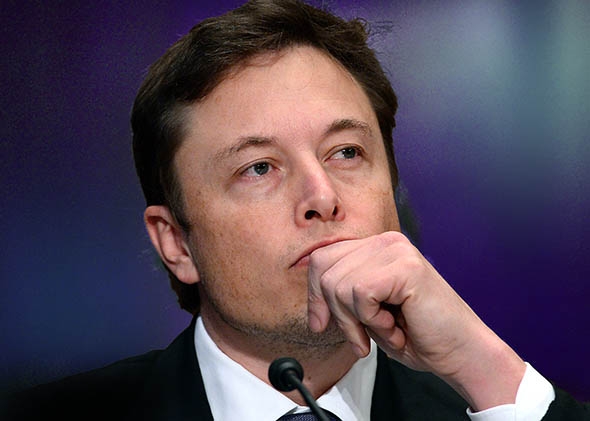
1. Elon Musk


An obvious choice. But what other individual has the chance to singlehandedly save the world? Not only would electric cars help bring down oppressive petro-regimes all over the planet, but cheap batteries for cars and houses would be a huge help in the fight against global warming. Musk is the most important individual working to make those technologies happen.

People I admire for similar reasons: Danielle Fong, Lyndon Rive

2. Kathy Matsui


As you all know, women's equality in Japan is a big issue I care about. I'm also of the school that thinks that economic equality is a prerequisite for social equality. No one has done as much to promote the idea of "womenomics" as Kathy Matsui. Many of the changes we are seeing in Japan originated from the ideas of Matsui.

People I admire for similar reasons: Sayaka Osakabe, Akie Abe

3. Elizabeth Warren


I don't agree with Warren on every issue, not by any means. But no other person in the United States has been as tireless and effective about fighting the excesses of the 2000s-era industrial policy. Just pushing through the CFPB would be heroism enough for one lifetime. Warren will probably go down in history as the most important reformer of the current period.

People I admire for similar reasons: Paul Volcker

4. Shinzo Abe


I was once about as big an Abe detractor as you could find, back in 2006 when it seemed like he was undoing everything Junichiro Koizumi had accomplished. But then Abe transformed himself into the super-Koizumi, with some help from his wife and his economic advisers, made a stunning comeback, and is now transforming the Japanese economy and society in ways that will be mostly good.

People I admire for (somewhat) similar reasons: Koichi Hamada, Joko Widodo

5. Steve Chu


The energy crunch is humanity's biggest challenge, and it will take both government and the private sector to beat it. On the private sector Elon Musk is the icon, but in the government sector, Steve Chu is the biggest hero. Chu worked tirelessly to create a sensible energy policy that was diversified and that balanced the need for boldness with the fear of waste.

People I admire for (somewhat) similar reasons: Barack Obama

6. Marc Andreessen


Putting Marc on this list will cause me some embarrassment next time I see him on Twitter, but there's no way I could leave him off. Well of course he did kind of invent the Internet, but remember that this list is about current activities. Nowadays, as a venture capitalist, he's A) funding neat stuff, while B) working to define the culture of Silicon Valley in a positive way. Many other people do (A); few other people of such prominence do (B). Along with his wife, Laura Arrillaga-Andreessen, he's working to increase women's participation in the IT industry.

People I admire for (somewhat) similar reasons: Bill Gates

7. Jim Pethokoukis


Yes, this is a repeat from the "heroes of blogging" list, but oh well. Transforming one of America's two dominant political ideologies is a tall, tall order. Of all the people in the "reform conservative" movement, the one with the best vision and message is Jim Pethokoukis of the American Enterprise Institute. See here, here, and here for his attempts to grab the tiller of the conservative ship and steer it in a more rational, forward-looking direction.

People I admire for similar reasons: Michael Strain

8. Jon Stewart


There was a moment, sometime in 2005, when it seemed like Jon Stewart was the only sane man in America. American politics was still in a fever from 9/11, and the Iraq War and the second Bush election certainly didn't help. I still feel like the turning point, for some reason, was when Stewart destroyed the moronic show Crossfire on live TV. More importantly, Stewart has worked tirelessly for over a decade to expose the hyper-partisanship of our era for the joke it is.

People I admire for similar reasons: Stephen Colbert, John Oliver

9. Terence Tao


It's one thing to be the smartest human on the planet. It's another thing to be both the smartest human on the planet and a nice, well-adjusted person. We are raised on archetypes of the crazy smart guy - Isaac Newton slurping mercury, Grigori Perelman turning down a million dollars and living off of his mother's pension. Of course, it's not those guys' fault that they are oddballs, but symbolism is important. Tao is a new model of hypergenius -  a well-adjusted guy who shares his work on his blog, collaborates with everyone, and just has fun.

People I admire for (somewhat) similar reasons: Jim Simons

10. My "heroes of blogging": Brad DeLong, Annalee Newitz, Ramez Naam, Devin Stewart, Cory Doctorow, Phil Yu, Richard Florida, Paul Krugman, Barry Ritholtz, Mark Thoma, Miles Kimball, Justin Wolfers, and more!


Obviously, this is not an exhaustive list. But I'm exhausted now, in any case.


Update

Tyler Cowen posted his own "most admired" list, mostly consisting of everymen/everywomen in various important or dangerous positions. Good point - it's easy to forget the quiet heroism of normal people.

Selasa, 03 Februari 2015

What killed my favorite bookstore? (SEE UPDATE)


My favorite bookstore in the world is Borderlands Books in San Francisco, a sci-fi themed bookstore.

Or rather, it was my favorite bookstore, because it's about to be forced out of business courtesy of San Francisco's new minimum wage hike, and pressure from Amazon.

Two lessons from this:

Lesson 1: The bad effects of minimum wages are real. 

There's just no way around it. Yes, we liberals often like to talk about all those studies that show that the effect of minimum wage hikes isn't that big. But on the margin there is going to be an effect. And when your favorite business is on the margin, that means your favorite business gets the ax.

If you want to accuse Borderlands owner Alan Beatts of being a money-grubbing profiteer, be my guest, but you'll be wrong. The whole reason Borderlands exists in the first place, in the face of pressure from Amazon, is that it is close to being a nonprofit. From Beatts' blog:
[T]he basic facts: 
1)  The bookselling side of Borderlands has never been terribly profitable.
2)  Based on current business, the new minimum wage, once fully in effect ($15 per hour in 2018) would move the bookstore from being modestly profitable (roughly $3000 in 2013 before depreciation) to showing a yearly loss of roughly $25,000.
3)  It is reasonable to expect that the best-case, long term sales trend for a brick-and-mortar bookstore is relatively flat.
4)  Making 50-60 hours of work, per week, with no real holidays on my part an intrinsic part of our business plan is neither viable long-term nor something I am going to do.
5)  Any solution would need to have a very good chance of working.  Closing now is a straightforward process and doesn't require any money and a limited amount of frantic work.  Pouring money and / or time into a solution that might work is not something that I'm willing to do at this point in my life. 
The only solution that I can see would be to reduce expenses by an amount at least equal to our projected yearly loss.  The only expense that is large enough to reduce by that much is our rent.  So, the only viable solution I can see would be to substantially reduce or eliminate the amount we pay to house the store.  The problem is that I can't see any realistic way to achieve that.  If I had the money, I would buy a building, move the store there and stop paying rent.  It would be a terrible investment, since I'd be losing out on the income from that money, but if I were driven by profits or money, I wouldn't be running a bookstore to start with... 
However, I don't have even a fraction of the money that would be required for that.  Based on the current market and the sort of building we would need, the price tag would probably be somewhere between 1.5 and 3 million dollars.  So, what it gets down to is -- if someone (or a group of someones) out there wants to buy us a building, I'll be happy to move the store and stay in business.  But, otherwise, I cannot see any solution that will allow us an even half-way reasonable chance to make the business work at a minimum wage of $15 an hour. 
Do I seriously think that someone will buy us a permanent home for the store?  Not at all.  I would do it for my store, but I don't think I'd do it for anybody else's.  On the other hand, if I had as much cash as Ron Conway, Mark Zuckerberg or Elon Musk, I guess I might do something like that.  But, realistically, it's not going to happen. 
But, if it did, I would keep running Borderlands 'til someone carried me out feet first.  I really don't want to close.  But I can't see any real, sane alternative.
Now you tell me if he sounds like a capitalist pig.

No, a high minimum wage really does kill some good and valuable things.


Lesson 2: Technological progress does have drawbacks.

I LOVE Amazon. I would NEVER go back to the days of brick-and-mortar stores. But that doesn't mean that the advent of this cool new technology is costless. When bookstores disappear, a unique kind of positive experience will no longer be available to humanity. Amazon's bookselling business may give customers more overall pleasure than bookstores, but there is a type of pleasure involved with hanging out in a bookstore that will not be replicated by Amazon ever (or at least until virtual reality technology becomes almost inconceivably more advanced). Just because costs are worth paying doesn't mean there aren't costs.

But in fact, since there is a positive externality to bookstores, created by the presence of other shoppers, it's likely that there are a few individuals out there who will actually be made worse off, in the strictest sense, by the advent of Amazon.

In other words, new technology is an improvement by many yardsticks, but not always by the yardstick of Pareto efficiency. When brick-and-mortar bookstores are gone, you really can't buy your old bundle back (unless you are a very rich person who can afford to buy a bookstore and operate it at a loss).


My new goal is to get really rich so I can buy and operate a Borderlands-type bookstore at a loss.


Update

Borderlands may not be dead yet. Here's how you can help save it. And more plots are being hatched...